MAKE A DIFFERENCE
2108 S 90th St
Tacoma, WA 98444
100% of your donation goes directly to our programs.
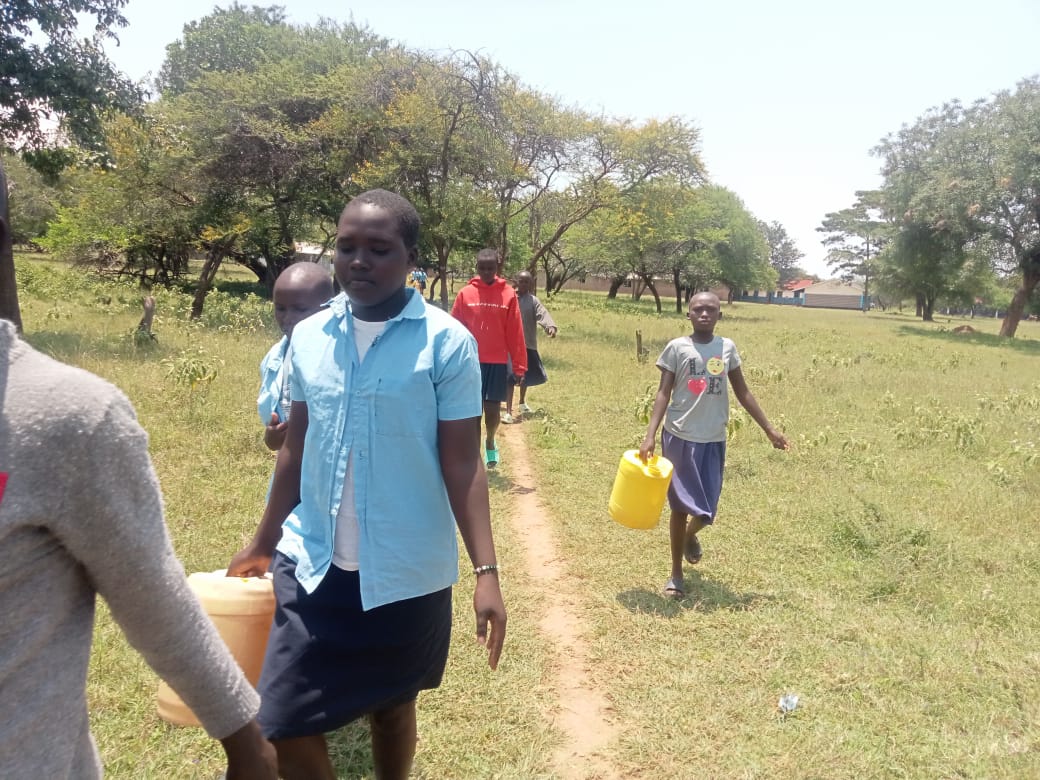
Children in West Pokot lift Jerrican in search of water - a daily reminder of their struggle for clean water. Learners walk a Long in search of water instead of attending Lessons.
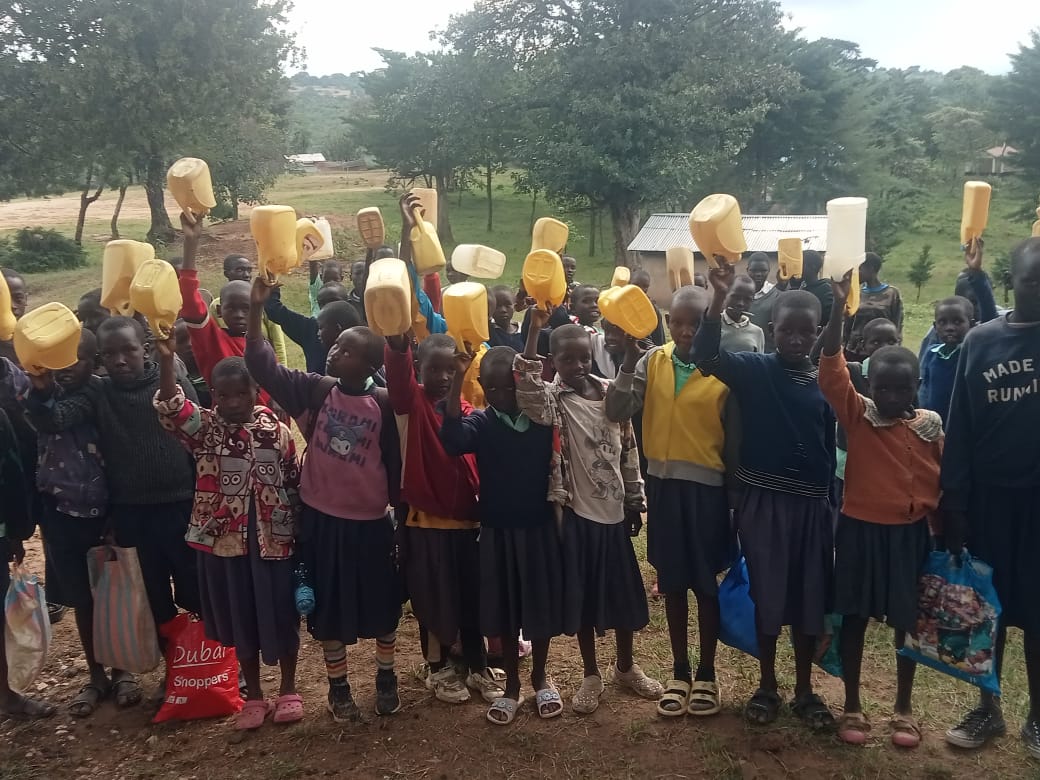
Between a well and a classroom: The impossible choice for many children: Fetching water or getting an education.
Small actions. Big impact. These projects offer immediate, visible change — simple yet powerful steps toward healthier, empowered communities in West Pokot.
Clean water, sanitation, and hygiene are essential for children’s health, education, dignity, and wellbeing. In West Pokot and other underserved communities, water scarcity, poor sanitation, poverty, and climate stress continue to affect school attendance, learning, nutrition, and girls’ participation in education.
Inspired by global best practice in sustainable WASH innovation, GMS-K promotes practical, community-led solutions that combine safe water access, sanitation, hygiene education, menstrual health support, and climate resilience.
We support boreholes, rainwater harvesting, water storage, and solar-powered pumping systems to reduce long walks for water and keep children in school.
We promote handwashing stations, hygiene education, clean school compounds, and safe sanitation facilities that protect children from preventable disease.
We provide reusable pads, menstrual education, girl-friendly latrines, disposal solutions, and stigma reduction so girls can learn with dignity.
We integrate school gardens, tree planting, water conservation, and community ownership to strengthen resilience in drought-prone areas.
Our School Feeding Program supports vulnerable learners with nutritious meals that improve attendance, concentration, health, and retention. In many underserved schools, hunger affects children’s ability to learn and participate fully in class.
GMS-K works with schools, parents, local suppliers, and community groups to promote sustainable feeding models using locally available foods where possible. The program is also linked with WASH, school gardens, and nutrition education to create healthier learning environments.
By feeding children today, we help them stay in school, learn better, and build a stronger foundation for the future.
Access to safe water, sanitation, and hygiene is essential for children’s health, dignity, and learning. In West Pokot and other underserved communities, many learners still walk long distances in search of water, while schools struggle with limited handwashing facilities and inadequate sanitation.
Our School WASH approach promotes climate-resilient and community-led solutions, including rainwater harvesting, boreholes, water storage, handwashing stations, and safe sanitation facilities. These interventions reduce disease, support school feeding, and make menstrual hygiene management possible.
Every WASH investment creates a ripple effect: healthier learners, cleaner schools, stronger feeding programs, and safer environments for girls and boys.
Menstrual Health & Hygiene (MHH) is essential for ensuring that girls can learn, participate, and thrive with dignity. In many schools across West Pokot, girls face challenges accessing menstrual products, clean water, private sanitation facilities, and accurate information about menstruation. These barriers often lead to absenteeism, reduced confidence, and missed educational opportunities.
Through our integrated MHH program, we support girls with access to reusable sanitary pads, menstrual health education, and safe, girl-friendly WASH facilities. We work with schools, parents, teachers, community leaders, and women’s groups to challenge stigma, promote positive attitudes toward menstruation, and create supportive environments where girls can manage their periods safely and confidently.
Our approach combines menstrual health education, access to clean water and sanitation, disposal solutions, and community awareness initiatives. Training local women’s groups to produce reusable sanitary pads strengthens sustainability while creating economic opportunities within the community.
By investing in menstrual health and hygiene, we help girls stay in school, improve educational outcomes, protect their health, and advance gender equality. Every contribution helps ensure that menstruation never becomes a barrier to learning, dignity, or opportunity.
Sustainable change happens when communities lead. GMS-K works closely with schools, parents, local leaders, women’s groups, churches, government actors, and development partners to design solutions that respond to real community needs.
Our approach strengthens local ownership through training, dialogue, joint planning, and shared responsibility. We believe communities should not only receive support, but also shape, manage, and sustain the programs that affect their children.
Through partnership, we build programs that are locally owned, culturally responsive, and sustainable beyond donor support.
Environmental conservation is central to protecting children’s future. In drought-prone communities, climate stress affects water access, food security, school attendance, and household livelihoods.
GMS-K promotes practical school and community-based conservation activities that strengthen climate resilience while teaching learners to become responsible stewards of the environment.
By linking conservation with education, WASH, and feeding programs, we help communities protect natural resources while creating safer, greener learning spaces.
No child should have to choose between fetching water and attending school. No girl should miss class because of menstruation. No learner should struggle to concentrate because of hunger. Yet these realities continue to affect thousands of children in vulnerable communities across Kenya.
Through integrated School Feeding, WASH, Menstrual Health, Community Empowerment, and Environmental Conservation programs, GMS-K works to remove the barriers that keep children from learning and succeeding. Our approach creates safe, healthy, and supportive environments where children can grow with dignity and confidence.
When you partner with us, you help provide meals, clean water, sanitation facilities, menstrual health support, climate-resilient solutions, and opportunities for entire communities to build a sustainable future. Together, we can turn vulnerability into resilience and hope into lasting impact.